Last week we talked about how to be saved. This week we’ll talk about a sure way not to be saved.
But first:
 Please pray for the brave people of Ukraine (which is about 75% Orthodox, 35 million people), still being bombarded day after day by Russia in this unjust unholy war, now entering its fourth year, longer than the Nazi occupation of Ukraine.
Please p ray for the people of the Palestinian West Bank, where about 50,000 Christians still live. The Israeli government has just placed 60% more of that territory under direct Israeli control, allowing all this land (which has belonged to Palestinian families for many centuries) to be confiscated by Israeli settlers.
In this Sunday’s Scripture readings we hear the Church’s last minute instructions as we go into Great Lent. There’s a whole lot to talk about today.
Let’s begin with Sunday’s Epistle:
Romans 13:11-14; 14:1-4
Part One: “Brethren, salvation is nearer to us now than when we first believed; the night is far gone, the day is at hand. Let us then cast off the works of darkness and put on the armor of light; let us conduct ourselves becomingly as in the day, not in reveling and drunkenness, not in debauchery and licentiousness, not in quarreling and jealousy. But put on the Lord Jesus Christ, and make no provision for the flesh, to gratify its desires.”
An early Lenten hymn begins “The Lenten spring has come…” Oh, that sounds so good!
Orthodox Lent is intended to be a positive experience, as we pass through spring towards the light of summer, through Lent towards the light of Pascha and Pentecost. Lent is our annual season of renewal, a time to concentrate on spiritual growth as we prepare for the coming Great Day of our Salvation.
Saint Paul states the obvious. Time passes. That Day of our Salvation is nearer than it was before. We don’t know when that Day will come – either Christ’s return or the day of our death – so be prepared. Be ready. Don’t waste time on trash. Note: When he says “make no provision for the flesh”, he means our “lower nature”. He does not mean we shouldn’t eat!
Part Two: “As for the man who is weak in faith, welcome him, but not for disputes over opinions. One believes he may eat anything, while the weak man eats only vegetables. Let not him who eats despise him who abstains, and let not him who abstains pass judgment on him who eats; for God has welcomed him. Who are you to pass judgment on the servant of another? It is before his own master that he stands or falls. And he will be upheld, for God is able to make him stand.”
Here, I think, is why the Church Fathers chose this passage: Do not judge how other people keep (or don’t keep) the Lenten Fast. None of your business. That is between them and God. Does God cast anybody out of His Church because they don’t fast? No.
Holy Gospel: Matthew 6:14-21
Part One: The Lord said, “If you forgive men their trespasses, your heavenly Father also will forgive you; but if you do not forgive men their trespasses, neither will your Father forgive your trespasses.
Is that clear enough? And it’s no secret, for every day were pray this terrifying prayer: “Forgive us our trespasses as we forgive those who trespass against us.” Lord, if I refuse to forgive someone, please don’t forgive me. Lord, if I hold a grudge against someone, please hold a grudge against me. We hear this again and again in the New Testament.
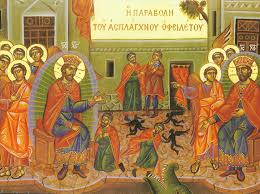
Take the parable of the wicked servant who was forgiven a huge debt by his master, but who refused to forgive his fellow servant a small debt. The master was angry and had him killed! And, says Jesus, “so will my heavenly Father do to you if you do not forgive your brothers from your heart”! Matthew 18:21-35 Again, is that clear enough? And it’s true.
It’s not that God our Father plays “tit for tat” with us. It’s because if our heart is too hardened to forgive others, then it is too hardened to let God’s forgiveness in. A hard heart can kill our immortal soul, and Hell can begin even on this side of death.
That is why, at the end of every Confession I hear, I ask “Is there anyone you have not forgiven?” Because if you haven’t forgiven, there is no way you can be forgiven.
Here it is in a nutshell: If there is someone you haven’t tried to make up with, someone you have not apologized to, someone you have not forgiven – then if you die like this, die suddenly from a fatal disease or get hit by a truck or get shot, * you’ll probably go to Hell. If there is anyone you have not forgiven, your immortal soul is in immediate danger.
- You readers who are not in the United States, please understand.
Forgiveness Vespers
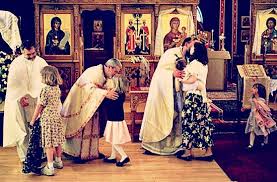
As we enter into Great Lent, the Church provides for us an easy way to apologize or forgive: “Forgiveness Sunday”. Lent begins a beautiful service called “Forgiveness Vespers”. At the end of Vespers, all come forward and one by one and ask each other’s forgiveness – “Forgive me, a sinner” – and exchange the peace in the Orthodox way and respond to each other “God forgives you, and I forgive you.” In some parishes people prostrate before each other, before the presence of Christ in each other.
Western Ash Wednesday is individualistic * and a bit forbidding. One by one people receive the ashes and are told, “Remember, O man, that you are dust and to dust you shall return.” And that’s the truth. It’s good to remember our mortality as we begin Lent.
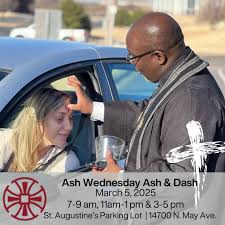
These days Ash Wednesday is especially individualistic in some Protestant and Roman Catholic churches which now have (so help me, God, I’m not making this up) drive-by “ashing”.
Our Orthodox entrance into Lent is communal and sweet, filled with love and forgiveness. * I hope you’ll attend Forgiveness Vespers.
- I’ve tried to imagine “drive by-forgiving”. Can’t do it!
Next, this Sunday before you go into Lent,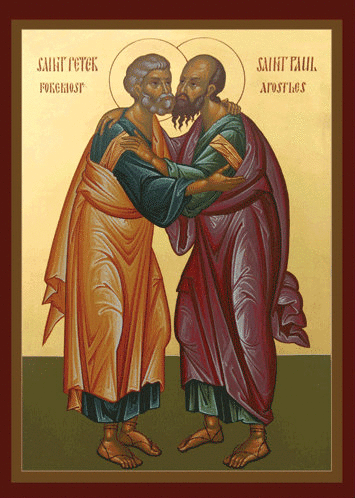 if there is anyone anywhere you should apologize to but have not, apologize. Say “Forgive me”. Be tough on yourself: Say it, or write it, or e-mail it, or if the person is departed, ask the angels to convey the message. If you are at odds with someone, even if you think you’ve done nothing wrong, say “Forgive me”, for the truth is, if there is someone you’re not getting along with, likely you were part of the problem – even if you didn’t intend it, even if you don’t know what it was, even if you’re too proud to consider the possibility.
My experience after 63 years as a priest is that most (not all) hurts are unintentional. It’s just that people are preoccupied with their own problems or overcome by them, and we just get in the way at the wrong time. Or people mis-speak or mis-act and never notice it. I’ve done a lot of counseling, I’ve heard a lot of Confessions, I’ve done a lot of living, I’ve done a lot of unintentional mis-speaking and mis-acting myself. And I’m convinced that most of the time people who hurt each other did not mean to do so. The result is that both sides think the other was in the wrong.
And the fact is, if you have not tried to make up, you are in the wrong for precisely that reason, because you haven’t made it clear that you will forgive. Again, I’m convinced that when people don’t apologize, often the reason is because they’re afraid if they say it they’ll be rejected, afraid we’ll beat ’em over the head with it. So make it easy for people to apologize. Be like the 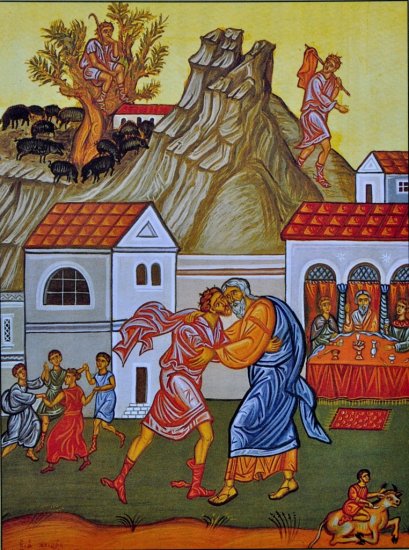 father of the prodigal son who, before his son could say a word of apology, rushed out to greet him, so his son would know he would be forgiven. Be like God who has rushed out to greet us in our Lord Jesus Christ.
So: Be tough on yourself. Say “forgive me”. But make it easy for others. That will make up for the thousands of times God has been easy with you, when you never told Him you were sorry. Despite that, He has kept pouring out His blessings on you, so many things we take for granted. “Be merciful as your Father is merciful.” Luke 6:36
Do not be like Queen Elizabeth I of England. She was once angry with someone and was told, “But your majesty, God has forgiven him.” According to the story she replied “God may forgive him, but I never will!” I hope she got over that. I mean, who do we think we are? holier than God? God forgives, but we won’t?
Two cautions: 1 Sometimes, when another person shows that they’re sorry, it might seem “pompous” for us to use the words “I forgive you”. “That’s OK” works just as well. 2 When people are angry at us, we do well to wait till their emotions settle down. Then say “Forgive me”. Play all this by ear.
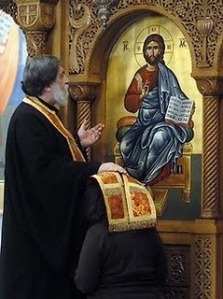 Turn the situation around: You’ve done something wrong, and you still feel guilty. Go to Confession. Sacramental Confession was given by our Lord Jesus Christ to help us, to heal us. In Confession we “let it all hang out” to a priest who (I guarantee you) will not be shocked. He’s heard it all before. And we receive verbal assurance from someone authorized by the Church that God forgives us. That helps. Believe me, it does. I hope you’ll make use of this sacrament. Under ordinary circumstances, it is also a great tool for spiritual growth . If you’re not accustomed to going to Confession, ask your pastor.
What is forgiveness?
Saying “Forgive me, a sinner” to each other on Forgiveness Sunday is genuinely effective in opening our hearts to God and to each other. However, it is only the beginning of the process. Forgiveness requires a whole lot more than words and a hug.
People are often confused about this. Forgiveness is not a feeling. It is essentially an action. * Or actually a lack of two actions.
1 Forgiveness means not getting even, not paying back. When in Confession I ask the Penitent, “Is there anyone you have not forgiven?” sometimes the Penitent responds, “I thought I’d forgiven, but maybe I haven’t, because the anger keeps coming back; what that person did to me still hurts me.” I then sometimes respond: “Have you hired a hit man to ‘take him out’”? (I hope it’s not breaking the seal of Confession to tell you that so far none have answered “Yes”.) When they say “No”, I answer, “Then you have begun the process of forgiving.” The Penitent has confused forgiving with forgetting. Forgiveness consists of not paying the other person back.
2 The more difficult part is not to cultivate the hurt within ourselves, so that we will not be tempted to get even. In this sense, forgiveness is a process. It takes a while, and it’s difficult. Trying intentionally to get rid of the pain and anger doesn’t work – for as soon as we try to forget the hurt, we have remembered it again! Like any wound, if we keep digging into it, it will never heal. The trick is this: When the hurt arises again, do not focus on it. Instead immediately say “forgiven”, and immediately move on. Get your mind on something else. Say the Jesus Prayer. Read a book or listen to music, religious or otherwise. Even watch TV. Anything (respectable) rather that mull over the hurt. Give it time to die down. In time, by the grace of God, it will heal and go away, if not in this life, then in the next. This is not easy to do. The pain may keep throbbing again and again. We will need to put it down again and again. C.S. Lewis wrote (I paraphrase) that when Christ told Peter to forgive seventy times seven times, He meant for every sin! Forgive that sin, put it down again and again and again and again and again and again and again, and then keep forgiving.
This is not really for the sake of the person who hurt us. It’s for our own sake, for the sake of our immortal souls. Because the great danger in hanging onto hurts and grudges – in not forgiving people, in forever being angry at them – is what it will do to you. It will give that person power over you. And if you keep clinging to the hurt, it will allow him to destroy your inner spirit and make you miserable. It can corrupt and corrode your soul, and in the end, it can destroy your soul. Do not ever let another person do that to you. Give it up. Forgive.
Someone asked me the other day if forgiving requires us to resume a friendly relationship with the person. The answer is: No. That is to be hoped for and usually is possible. However, in a few cases it is better not to. The temptation to get back into the old issues would be too great. If this is the case, don’t feel guilty about it.
Before we’re done, let’s take three difficult cases:
1 Sometimes the person who has hurt you never says he’s sorry. Then, watch carefully. If he shows any sign of wanting to make up, any sign of being sorry, accept that as an apology. My father was like that, He was a good, loving man. God bless him. I miss him so much. But for some reason he just could not bring himself to say those words “I’m sorry”. It would have made life easier for him and for us if he had. However, he would show he was sorry in a multitude of ways. OK, that’s good enough. I wish I had more quickly understood that as an apology, because I knew he loved me.
2 What if the other person just (forgive me) doesn’t give a damn? What if he’s done you wrong and you’ve given him every opening, and he could not care less? Then, if you’ve honestly tried, and the rat is not sorry, don’t waste your energy on him. Forgive in your heart, and move on.
3 What if the person to be forgiven has done something truly horrible – cheated you out of your inheritance, or made off with your life savings? What is he just invaded a school and killed your son or daughter or grandson or granddaughter? What if the person has harassed and abused your wife or your child? Or if bombs are raining down on you for no reason, destroying your cities, your culture, killing your innocent loved ones? How would you forgive that? I say: Go to a competent Orthodox priest or monk or nun or counsellor and get help. Don’t try to cope with this all on your own.
Finally, let me tell you two of my favorite stories about forgiveness:
1 One Sunday Saint John the Merciful, Patriarch of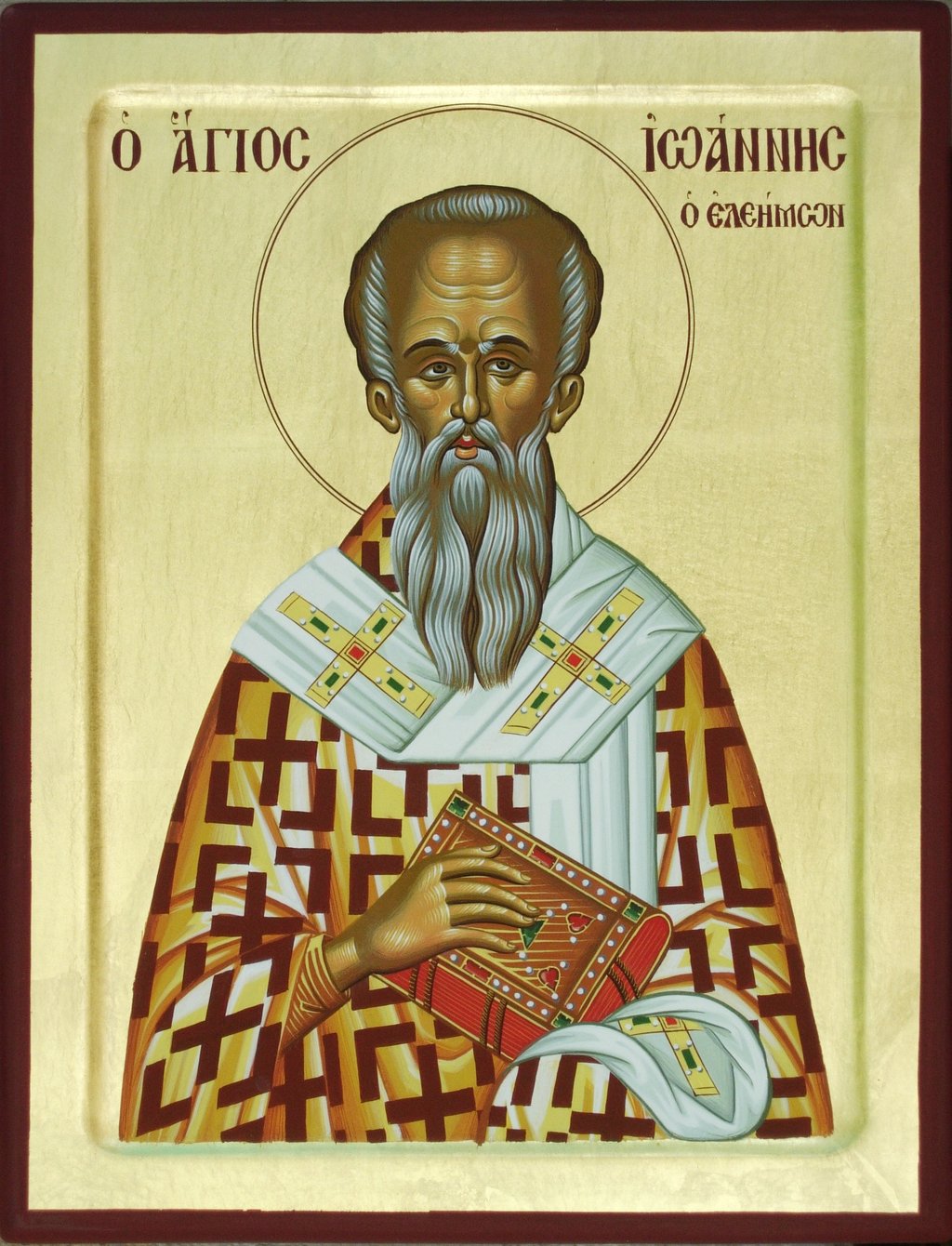 Alexandria, just before the Great Entrance of the Divine Liturgy, remembered that there was a priest in the city who was angry at him, with whom he had not made up. And then he remembered the words of our Lord: “If you bring your gift to the altar and there remember that your brother has something against you, leave your gift before the altar and go. First make peace with your brother, and then come and lay your gifts before the altar.” Matthew 5:23-24 So before he placed the Holy Gifts on the Altar, Patriarch John left the procession – I wonder how long the poor choir had to keep singing! – and he sent for his brother priest, made peace and only then did he come back to place the Holy Gifts on the altar.
2 There was a monk who had led a less than exemplary life, but nevertheless as he lay on his deathbed was blissful, not worried at all. His fellow monks said: “With the kind of life you’ve led, why aren’t you afraid of dying? afraid of God’s judgment?” The man answered, “Because I have forgiven everyone who ever hurt me, so I know God will have to forgive me, too”. And he died a happy man.
Forgive. Forgive. FORGIVE!
Finally, back to the rest of…
The Gospel reading
Part Two: “And when you fast, do not look dismal, like the hypocrites, for they disfigure their faces that their fasting may be seen by men. Truly, I say to you, they have received their reward. But when you fast, anoint your head and wash your face, that your fasting may not be seen by men but by your Father who is in secret; and your Father who sees in secret will reward you.
It’s none of our business, but how odd to put ashes on your face, when Jesus said not to – though I’m sure they do so in all humility.
Christ tells us not to make a show of our fasting – or of anything else we do for God.
Part Three: “Do not lay up for yourselves treasures on earth, where moth and rust consume and where thieves break in and steal, but lay up for yourselves treasures in heaven, where neither moth nor rust consumes and where thieves do not break in and steal. For where your treasure is, there will your heart be also.”
There are only three solid treasures you can take with you into the Kingdom: 1 God. Your relationship with God. 2 People. Your relationships with people. 3 You. Your immortal soul.
Lent is the time to get focused again on these three treasures, and prepare ourselves for life in the Kingdom of God.
God bless you all, brothers and sisters, and give you a good and happy and fruitful Lent.
Next Week: First Sunday of Lent: The Sunday of the Triumph of Orthodoxy. Triumph? How so?
Week after Next: Second Sunday of Lent: Saint Gregory Palamas